
Production route
Start with context, then agree the information and decisions needed at each stage.
Define the player task
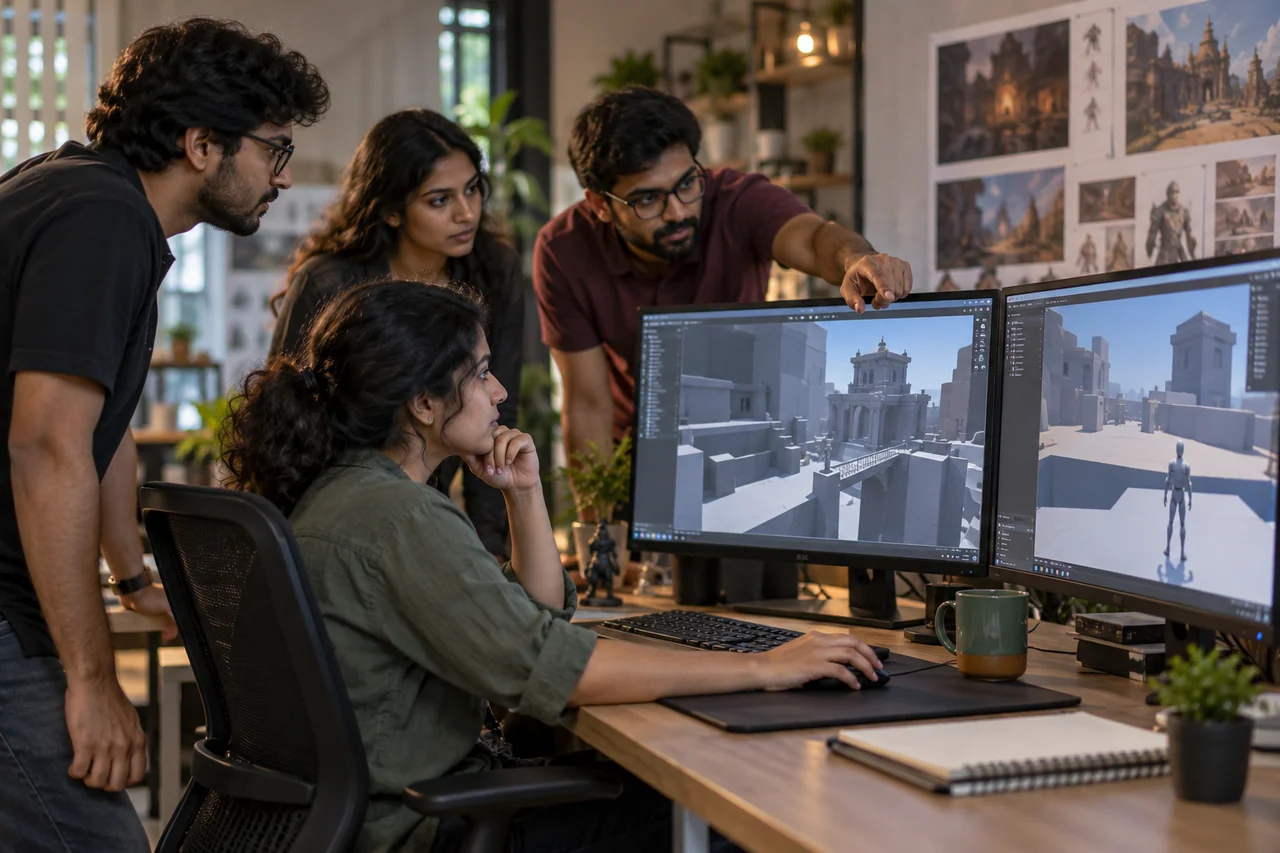
Describe the game, intended mechanics and the question the location must answer. Include target platform, camera perspective and the current build state. A small playable reference can be more useful than an extensive mood collection without gameplay context.
Include the current uncertainty as well as the desired output. That gives an early design review a concrete question to answer before visual detail accumulates.
Explore the spatial structure
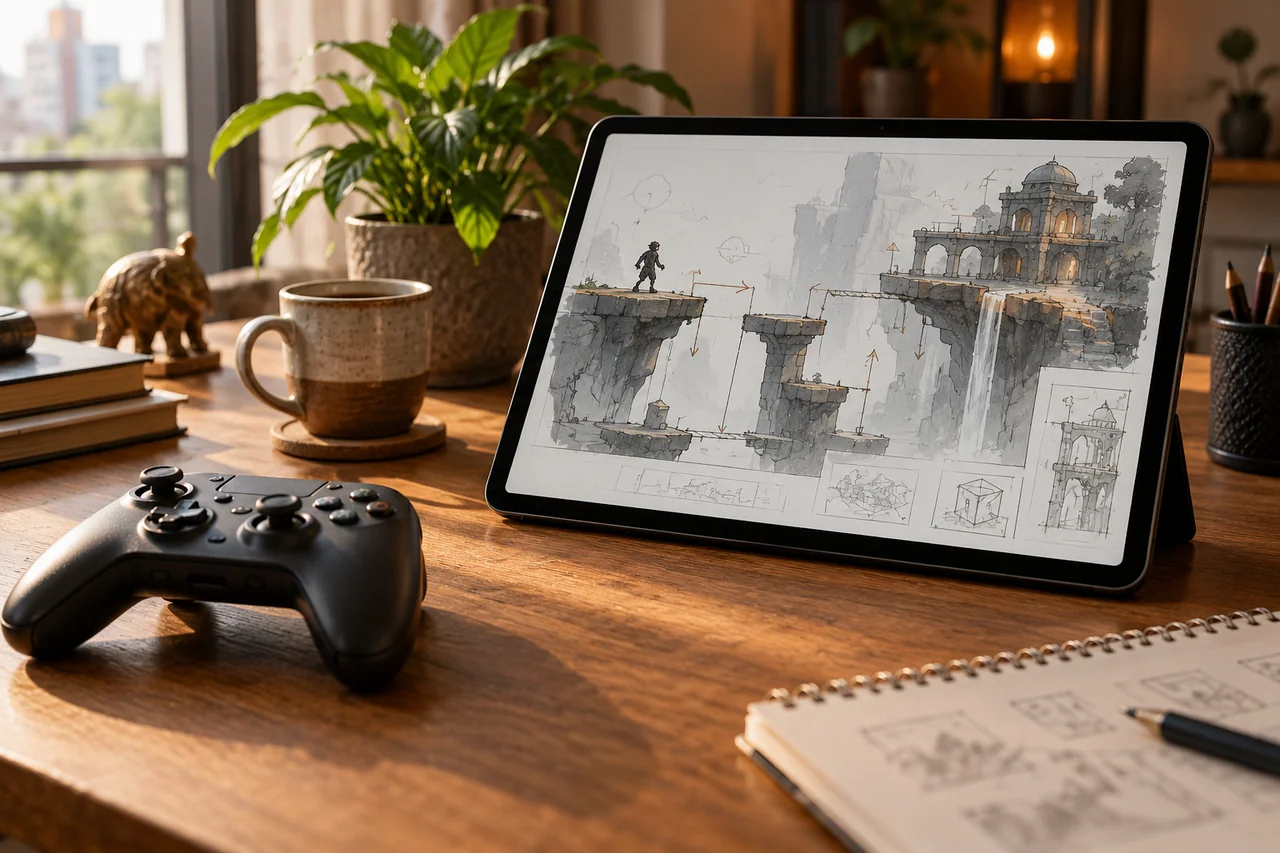
Work through routes, scale and points of attention before detailed dressing. Establish how the player reads the space and where decisions occur. Review the blockout against the actual movement and camera rather than judging it only from a still image.
Test landmarks and routes under the actual perspective. A clear diagram may still conceal an obstruction or scale issue that only appears during movement.
Develop within the constraints
Agree the asset approach, visual direction and technical boundaries. Review changes in manageable stages so the environment remains connected to performance, readability and the receiving team's workflow. Document decisions that affect later integration.
Keep feedback tied to the agreed stage. Separating spatial, visual and technical decisions helps the team see which changes depend on an earlier unresolved question.
Prepare the handover
Confirm the outputs, dependencies, file organisation and review notes. Test the agreed delivery in the specified environment where that is part of the scope. Any ongoing iteration or integration support needs its own clear arrangement.
Confirm how the receiving team will identify versions and dependencies. A short handover note can explain the intent of a design decision without replacing technical documentation.
Describe the space your game needs
Describe the game and the purpose of the map or location.